


Each year, we reach the inevitable introspection that leads to pondering our New Year’s resolutions. We review the ledger of the good, the bad and the indifferent. On the outcome of this scale, we decide whether the year was positive or one of those that should be dumped in the garbage, not to be recycled.
Based on data from the USA, 45% of people usually make New Year’s resolutions and, of these, only 8% actually achieve their resolutions. Interestingly, New Year’s resolutions fall into four broad categories: 1) self-improvement or education-related resolutions, 2) weight-related resolutions, 3) money-related resolutions and 4) relationship-related resolutions. What are the blockages from achieving these resolutions? The popular press has published countless articles pondering this dilemma.
Many of our New Year decisions are around getting more order in our lives and being the best we can be. In effect, we implement Lean on ourselves as individuals. There are things we can achieve on our own; for example, we might implement 5S and have a tidier house.
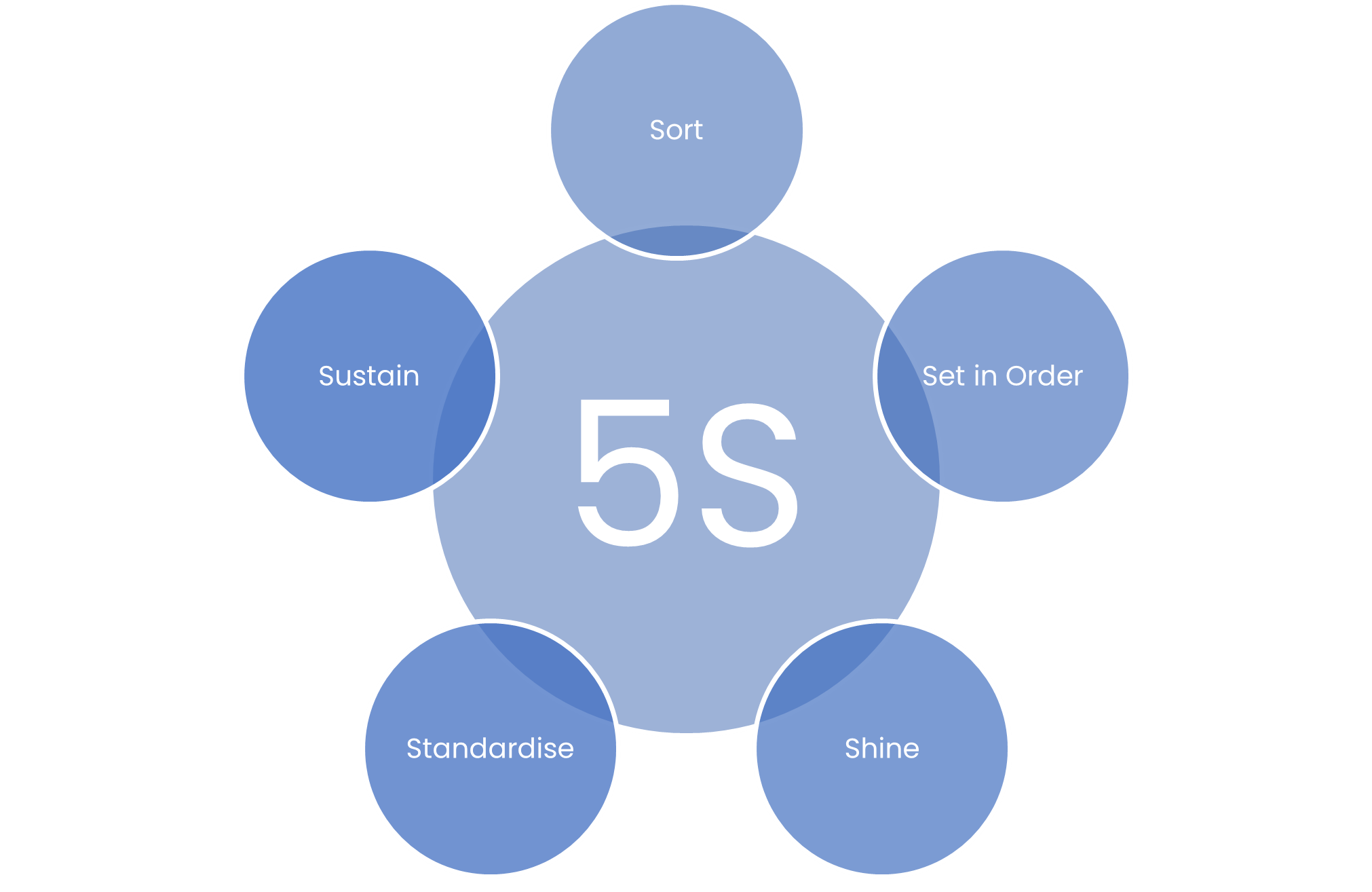
Keep things that are useful and throw out all that unwanted waste (clutter)
Step 2 – Set
Decide where to store things
Step 3 – Shine
Clean up cleared areas
Step 4 – Standardise
Reuse the same storage boxes and label them
Step 5 – Sustain
Keep improvements ongoing
Typically, Step 5, the real behaviour change, is the hardest, as it requires everyone else in your house to change as well!
How about considering what impact your work-life balance has? If our working life is a chaotic, never-ending battle of trying to meet deadlines, fixing errors and following up an endless array of things, can we expect our lives to be any different? How can we focus on working on our weight, relationships, self-improvement or further education when we spend the greater part of the day trying to rid our backs of all the problems or Noise that we face?
More broadly, though, changing your working hours and improving work-life balance cannot be done on your own, as we all interact with other people at work and all have interface activity Noise. Effectively, Noise activity slows us down and takes us away from our objectives.
Consider that a work-life balance change is a group activity and needs to be treated as such. We are implementing Lean thinking (think DMAIC). We need to engage our work colleagues on this change if we really want success. We need to identify and define that we are addressing work-life balance and target a key work process, such as product delivery. Follow this with a measurement activity: what is our baseline, what are the problems? We need a shared understanding of where we are.
Analyse opportunities to address: how can flow be achieved, the customer serviced better? Agree what can be changed and improved and get the teams involved in generating ideas for change. Plan, communicate and measure the change. If everyone is committed to the change and behaviour change is measured, we can drive and achieve sustainable change.
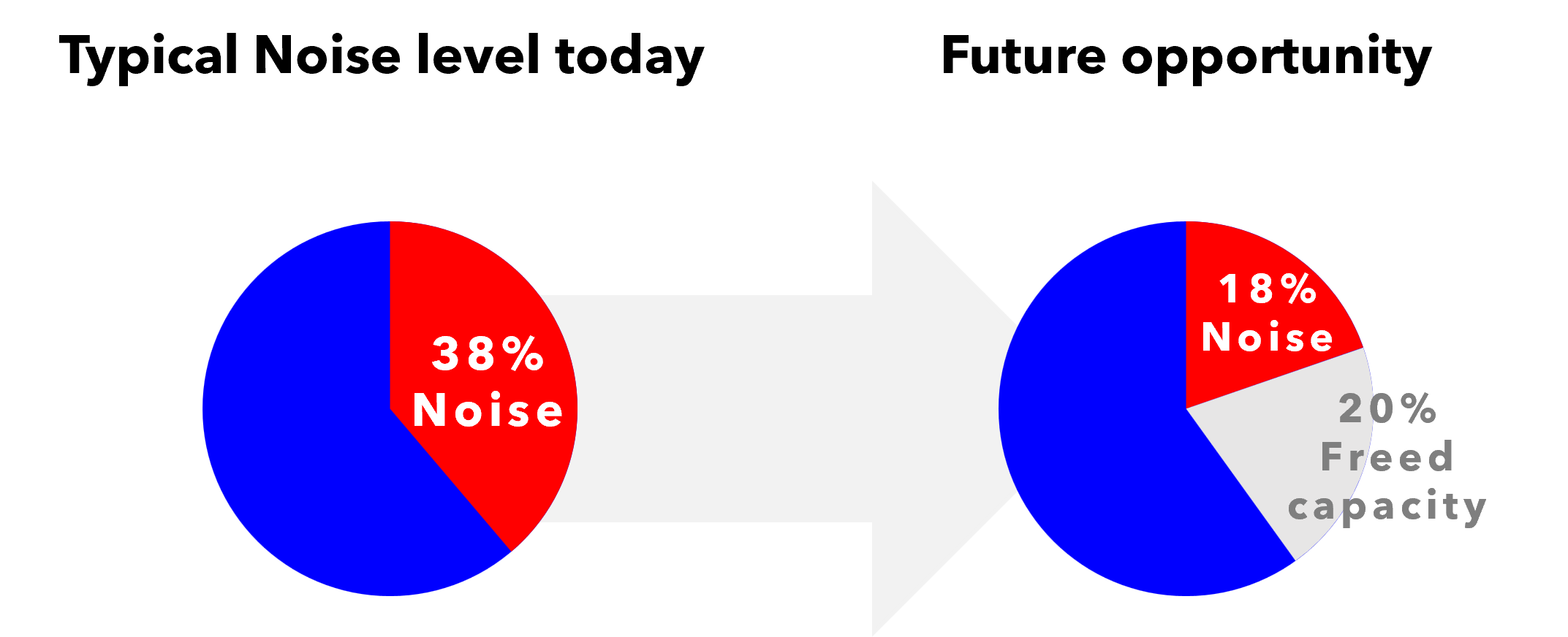
So set yourself a target. Our research with the University of Melbourne indicates that typically we all suffer from an average of 38% Noise. This is more than a third of our time. We can work with our colleagues to achieve a better work-life balance and halve our Noise.
Just think what you can achieve…